

By: Bray Boggs
In an effort to reduce missed calls, Major League Baseball (MLB) experimented with an automated ball-strike system during this year’s spring training games.
Baseball has often been labeled as a game of failure. Hitters strike out, fielders make errors, and baserunners get caught stealing. Just like the athletes make mistakes, the umpires on the field are not perfect either. On average, a home plate umpire will see nearly two hundred pitches each game and have to determine whether each pitch is a ball or a strike. This job is even more challenging considering the variety in height, batting stances, and pitching styles among MLB players.
The automated ball-strike system (ABS) is the newest in replay technology. It utilizes a Hawk-Eye camera to pinpoint where a pitch crosses home plate and is also programmed to construct a strike zone based on each batter’s height*. Human umpires will still make their judgments, but players can now challenge the calls. The exact location of the pitch is displayed on the stadium video board with millimeter precision to determine the correct ruling**.
Players and coaches in the MLB are the most visible proponents of the ABS, which could be utilized to fix critical errors in key moments of games. The difference in one pitch being a ball or a strike could be the deciding factor in who wins and who loses.
Preston Keiffer, a standout baseball player for Winfield High School, is optimistic about the system’s inclusion.
“Allowing players to challenge umpires’ calls could add an exciting dynamic to the game,” Keiffer said. “It gives players a voice and will lead to more accurate decisions, which fans generally appreciate.”
However, not everyone is sold on the idea of the electronic strike zone. Many baseball enthusiasts seek to preserve the human aspect of the game. Plus, heated quarrels and emphatic ejections often add to the entertainment.
R.J. Weiford, a high school and collegiate baseball umpire, hesitates to endorse the new technology.
“I appreciate the human element of sports, and the electronic strike zone threatens to change the game of baseball forever,” Weiford said. “Although I don’t have a problem with technology as a resource to assist umpires, I do see ABS as a driving factor for more hostility from the fans towards officials.”
Other concerns with the system include the fact that challenges will interrupt the flow of the game. Additionally, the art of “framing” pitches – where catchers strategically receive pitches in a fashion that makes the pitch appear as a strike – will become obsolete***.
Overall, the ABS is just one in a series of recent undertakings by Major League Baseball to improve the competition and integrity of the sport. Many fans welcome the system as necessary to the modern game, but there is also a strong faction of people who value the human umpire. Only time will tell how ABS will be incorporated, but, for this year’s season, it’s still strike three and you’re out with no possibility to challenge.
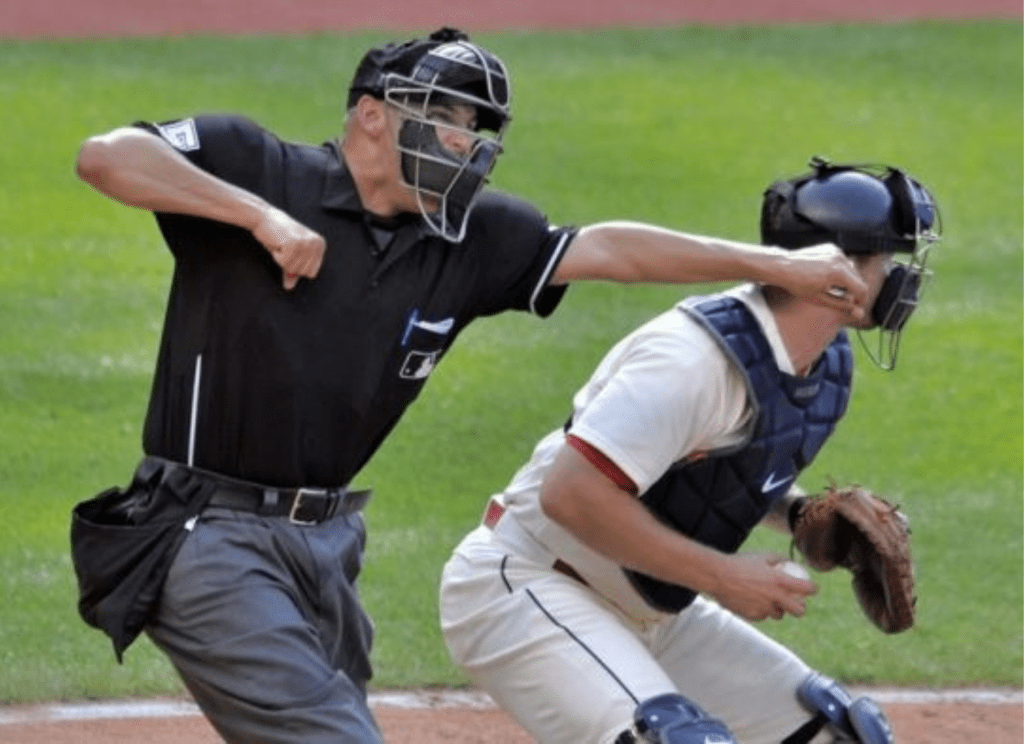
Picture: MLB Umpire Vic Carapazza energetically calls strike three.
 THE PHAROS
Leave a comment